Showing posts with label Bases and Salt Preparations. Show all posts

Sunday, July 9, 2017

2.34: Know the Common Rules for Prediction the Solubility of Ionic Compounds in Water: Common Sodium, Potassium and Ammonium Compounds are Soluble, All Nitrates are Soluble, Common Chlorides are Soluble Except Those of Silver and Lead (II), Common Sulfates are Soluble, Except for those of Barium, Calcium and Lead (II), Common Carbonates are Insoluble, Except for those of Sodium, Potassium and Ammonium, Common Hydroxides are Insoluble Except for those of Sodium, Potassium and Calcium (Calcium Hydroxide is slightly Soluble)


SOLUBLE: When substance can dissolve in a given volume of solvent
s
SOLUBILITY RULES:
s
SOLUBLE
INSOLUBLE
All Sodium, Potassium and Ammonium
None
All Nitrates
None
Common Chlorides
Except for Silver and Lead (II)
Common Sulfates
Except for Barium, Calcium and Lead (II)
Except for Sodium, Potassium and Ammonium
Common Carbonates
Except for Sodium, Potassium and Calcium (Calcium Hydroxide is Slightly Soluble)
Common Hydroxides

2.35: Understand Acids and Bases in Terms of Proton Transfer


ACIDS AND BASES (ALKALIS)
ss
  • When atoms or groups of atoms lose or gain Electrons, they form charged particles called Ions - either positively or negatively charged

    s
s
*ACIDS:
s
  • When Acids react, they will lose Electrons to form positive Hydrogen ions ( H+ )
  • These H+ Ions make the Aqueous Solution Acidic
  s
    Example: Hydrochloric Acid


HCl (aq)   →    H+ (aq)    +    Cl- (aq)

    s
   
s
*BASES (ALKALIS):
s
  • When Alkalis react, they will gain Electrons to form negative Hydroxide ions ( OH- )
  • These OH- ions make the Aqueous Solution an Alkali
s
    Example: Sodium Hydroxide


NaOH (aq)   →    Na+ (aq)    +    OH- (aq)

2.36: Understand that an Acid is a Proton Donor and a Base is a Proton Accept


ACIDS AND BASES (ALKALIS)
s
  • When atoms or groups of atoms lose or gain Electrons, they form charged particles called ions - either positively or negatively charged
s
Diagram:


Diagram showing the Role of Acids and Bases in the Transfer of Protons

*ACIDS:
s
  • Acids are Proton donors as they will react to lose Electrons to form positive H+ ions
  • These H+ ions make the Aqueous Solution Acidic

s
*BASES (ALKALIS):
s
  • Bases (Alkalis) are Proton acceptors as react to gain Electrons to form negative OH- ions
  • These OH- ions make the Aqueous Solution Alkaline

2.37: Describe the Reactions of Hydrochloric Acid, Sulfuric Acid and Nitric Acid with Metals, Bases and Metal Carbonates (Excluding the Reactions Between Nitric Acid and Metals) to Form Salts


REACTING ACIDS WITH METALS
s
Only Metals above Hydrogen in the reactivity series will react with Dilute Acids to form a Salt and Hydrogen Gas:


Acid    +    Metal   →    Salt    +    Hydrogen

s
Examples of Reaction Between Acids and Metals:


ACID
NAME OF PRODUCTS
EQUATION FOR REACTION

HYDROCHLORIC ACID

Metal Chloride and Hydrogen

x   +   2HCl   →   xCl2   +   H2

SULFURIC ACID

Metal Sulfate and Hydrogen

x   +   H2SO4   →   xSO4   +   H2
s

s

REACTING ACIDS WITH BASES (ALKALIS)
s
Acids will react with Bases - all Metal Oxides and Metal Hydroxides, in a neutralisation reaction to produce a Salt and Water:


Acid    +    Base   →    Salt    +    Water

s
Examples of Reaction Between Acids and Bases:


ACID
NAME OF PRODUCTS
EQUATION FOR REACTION

HYDROCHLORIC ACID

Metal Chloride and Water

xOH   +   HCl   →   xCl   +   H2O

SULFURIC ACID

Metal Sulfate and Water

xO   +   H2SO4   →   xSO4   +   H2O

NITRIC ACID

Metal Nitrate and Water

x(OH)2  +  HNO3  →  x(NO3)2  +  2H2O
s

s
REACTING ACIDS WITH METAL CARBONATES
s
Acids will React with Metal Carbonates to form Salts, Carbon Dioxide and Water:


Acid    +    Metal Carbonate   →    Salt    +    Carbon Dioxide    +    Water

s
Examples of Reaction Between Acids and Bases:

ACID
NAME OF PRODUCTS
EQUATION FOR REACTION

HYDROCHLORIC ACID

Metal Chloride, Carbon Dioxide and Water

xCO3   +   2HCl   →   xCl2      +   CO2   +   H2O

SULFURIC ACID

Metal Sulfate, Carbon Dioxide and Water

xCO3   +   H2SO4   →   xSO4   +   CO2   +   H2O

NITRIC ACID

Metal Nitrate, Carbon Dioxide and Water

xCO3  +  HNO3  →  x(NO3)2  +   CO2   +   H2O

2.38: Know that Metal Oxides, Metal Hydroxides and Ammonia can Act as Bases, and that Alkalis are Bases that are Soluble in Water


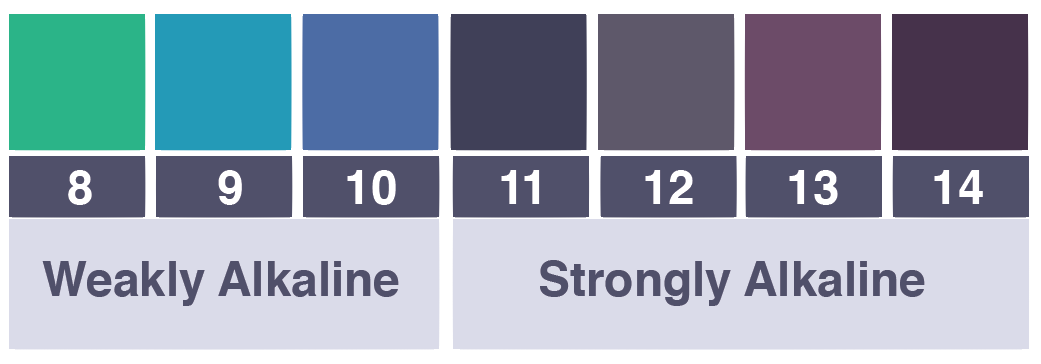
ALKALI: Bases that are soluble in Water and dissolves to form Hydroxide ions (OH-)


                                Diagram showing the pH of Bases (Alkali)

Example: Metal Oxides
s
Metal Oxides can act as a Base and is soluble in Water


Metal Oxide    +    Acid   →    Salt    +    Water
s
s

Example: Metal Hydroxides
s
Metal Hydroxides can act as a base and is soluble in Water


Metal Hydroxide    +    Acid   →    Salt    +    Water
s
s
Example: Ammonia
s
Ammonia can act as a base and is soluble in Water

Ammonia    +    Acid   →    Salt    +    Water