EXOTHERMIC
|
ENDOTHERMIC
|
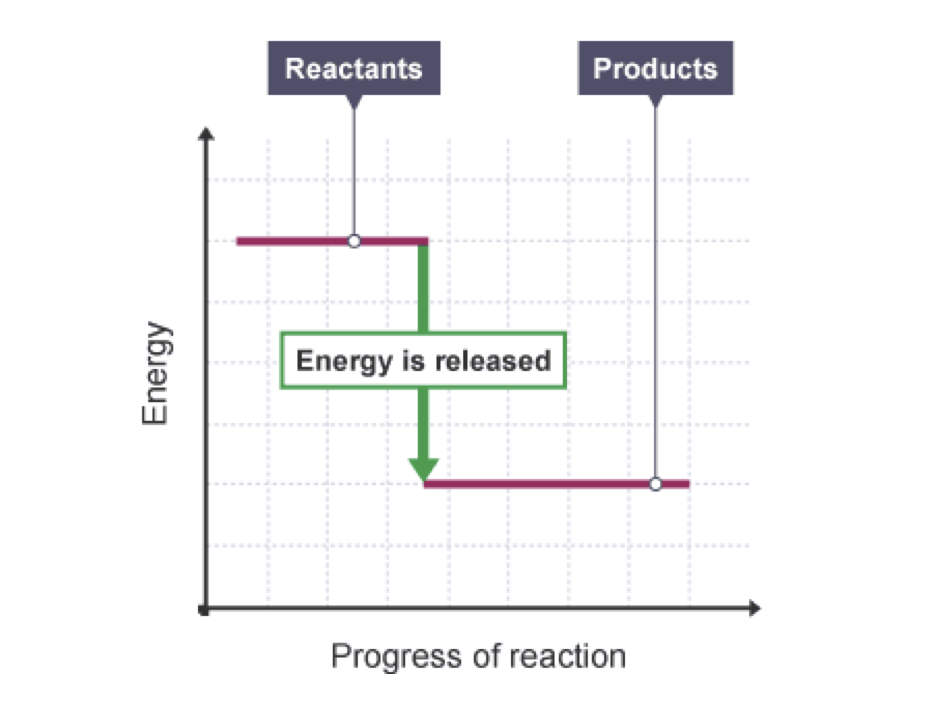
Diagram showing Enthalpy Change during an Exothermic Reaction
| 
Diagram showing Enthalpy Change during an Endothermic Reaction
|
DEFINITION:
Reaction in which energy is given out to surrounding, decreasing energy level (temperature increases)
|
DEFINITION:
Reaction in which energy is taken in from surrounding, increasing energy level (temperature decreases)
|
EXAMPLE:
|
EXAMPLE:
|
Showing posts with label a) Energetics. Show all posts
Showing posts with label a) Energetics. Show all posts
Sunday, July 9, 2017
3.1: Know that Chemical Reacts in Which Heat Energy is Given Out are Described as Exothermic, and those in Which Heat Energy is Taken In are Described as Endothermic

3.2: Describe Simple Calorimetry Experiments for Reactions such as Combustion, Displacement, Dissolving and Neutralisation
CALORIMETRY EXPERIMENT: Method to Measure heat transfer
s
CALORIMETRY EXPERIMENT FOR COMBUSTION:
s
CALORIMETRY EXPERIMENT - COMBUSTION
|
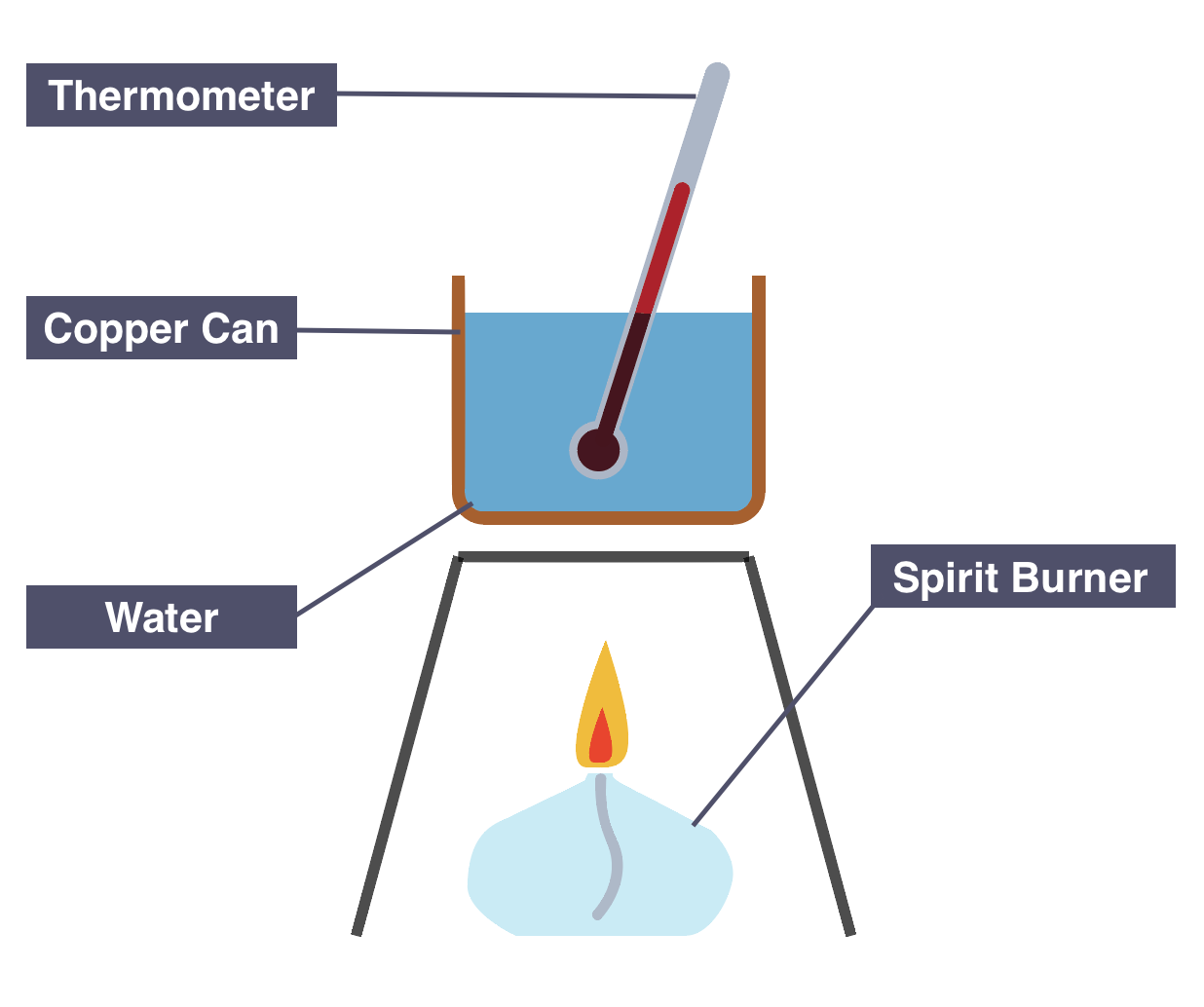
Diagram showing the Calorimetry Experiment for Combustion
|
METHOD:
|
CALCULATION:
Rise in Temperature of Water = Final Temperature - Initial Temperature
Mass of Alcohol Burnt = Initial mass - Final mass
Enthalpy Change:
 |
s
CALORIMETRY EXPERIMENT FOR DISPLACEMENT, DISSOLVING AND NEUTRALISATION:
s
CALORIMETRY EXPERIMENT - DISPLACEMENT, DISSOLVING AND NEUTRALISATION
|

Diagram showing Calorimetry Experiment for Displacement, Dissolving and Neutralisation
|
METHOD:
|
CALCULATION:
Rise in Temperature = Final Temperature - Initial Temperature
Mass of Solution = Solution 1 + Solution 2 OR Solution 1 if solid is dissolved
Enthalpy Change:

*If Water is not used, this is replaced by the mass or volume of other solutions
|
3.3: Calculate the Heat Energy Change from a Measured Temperature Change Using the Expression Q = mc△T
HEAT ENERGY CHANGE:
s
Data from calorimetry experiment can be used to calculate the heat energy change of a reaction:
s
EQUATION:
s
* m = Mass of Water or volume of Water
*If Water is not used, this is replaced by mass or volume of other solutions
ss
Example:
s
Energy from burning 0.5 g of Propane was transferred to 100 cm3 of Water to raise its temperature by 20°C. Calculate the heat energy change (in KJ)
s
Mass of Water = 100 cm3
Heat Capacity of Water = 4.2 j / g
Temperature Rise = 20°C
Energy Transferred = 100 x 4.2 x 20 = 8400 J
*1000 J = 1 KJ
So 8400 J = 8.4 KJ
Energy Transferred = 8.4 KJ
|
3.4: Calculate the Molar Enthalpy Change (△H) from the Heat Energy Change, Q
MOLAR ENTHALPY CHANGE:
s
Data from a Calorimetry Experiment can be used to calculate the molar enthalpy change of reaction:
s
EQUATION:

* m = Mass of Water or Volume of Water
*If Water is not used, this is replaced by the mass or volume of other solutions
ss
s
Example:
Energy from burning 0.5 g of Propane was transferred to 100 cm3 of Water to raise its temperature by 20°C. Calculate the molar enthalpy change (in KJ / Mol)
s
Mass of Water = 100 cm3
Heat Capacity of Water = 4.2 j / g
Temperature Rise = 20°C
Energy Transferred = 100 x 4.2 x 20 = 8400 J
*1000 J = 1 KJ
So 8400 J = 8.4 KJ
Mr of Propane = 44
Moles of Propane Burned = 0.5 ÷ 44 = 0.01136
Molar Enthalpy Change = 8.4 ÷ 0.01136 = 739
Reaction is exothermic so enthalpy change needs to be Negative
Molar Enthalpy Change = - 739 KJ / Mol
|
3.5C: Draw and Explain Energy Level Diagrams to Represent Exothermic and Endothermic Reactions
EXOTHERMIC
|
ENDOTHERMIC
|
Diagram showing the Enthalpy Change during an Exothermic Reaction
|
Diagram showing the Enthalpy Change during an Endothermic Reaction
|
DEFINITION:
Reaction in which energy is given out to surroundings, decreasing energy level (temperature increases)
|
DEFINITION:
Reaction in which energy is taken in from surroundings, increasing energy level (temperature decreases)
|
EXPLANATION:
|
EXPLANATION:
|
3.6C: Know that Bond-Breaking is an Endothermic Process and that Bond-Making is an Exothermic Process
ENDOTHERMIC AND EXOTHERMIC REACTIONS
s
Whether reaction is endothermic or exothermic depends on difference between the energy needed to break bonds and the energy released when new bonds form
ENDOTHERMIC:
- If more energy is absorbed than it releases, reaction is Endothermic as more energy is absorbed to break bonds

Diagram showing the Bond-Breaking in an Endothermic Reaction
s
EXOTHERMIC:
s- If more energy is released than is absorbed, reaction is exothermic as energy is released when new bonds form

Diagram showing the Bond-Making in an Exothermic Reaction
3.7C: Use Bond Energies to Calculate the Enthalpy Change during a Chemical Reaction
BOND ENERGY: Energy required to break a bond
s
METHOD:
s- Add all bond energies for all the bonds in reactant - this is the ‘energy in’
- Add all bond energies for all the bonds in products - this is the ‘energy out’
- Calculate the energy change: energy in - energy out
EQUATION:
Energy Change = Energy In - Energy Out
|
s
Example: An Exothermic Reaction
Hydrogen and Chlorine reacts to form Hydrogen Chloride Gas:
H - H + Cl - Cl → 2 x (H - Cl)
ss
Table below shows the bond energies relevant to this reaction:
BOND
|
BOND ENERGY ( KJ / MOLE )
|
H - H
|
436
|
Cl - Cl
|
243
|
H - Cl
|
432
|
Energy In = 436 + 243 = 679 KJ / Mole
Energy Out = 2 x 243 = 864 KJ / Mole
Energy Change = 679 - 864 = -185 KJ / Mole
*Energy change is negative, therefore showing that more energy is given out to the surroundings than taken in, indicating that this is an Exothermic Reaction
|
s
Example: An Endothermic Reaction
Hydrogen Bromide Decomposes to Form Hydrogen and Bromine:
2 x ( H - Br ) → H - H + Br - Br
ss
Table below shows the bond energies relevant to this reaction:
BOND
|
BOND ENERGY ( KJ / MOLE )
|
H - Br
|
366
|
H - H
|
436
|
Br - Br
|
193
|
Energy In = 2 x 366 = 732 KJ / Mole
Energy Out = 436 + 193 = 629 KJ / Mole
Energy Change = 732 - 629 = +103 KJ / Mole
*Energy change is positive, therefore showing that more energy is taken in from the surroundings than is given out, indicating that this is an Endothermic Reaction
|
Subscribe to:
Posts (Atom)