Showing posts with label i) Electrolysis. Show all posts

Monday, July 10, 2017

1.55C: Understand Why Covalent Compounds Do Not Conduct Electricity


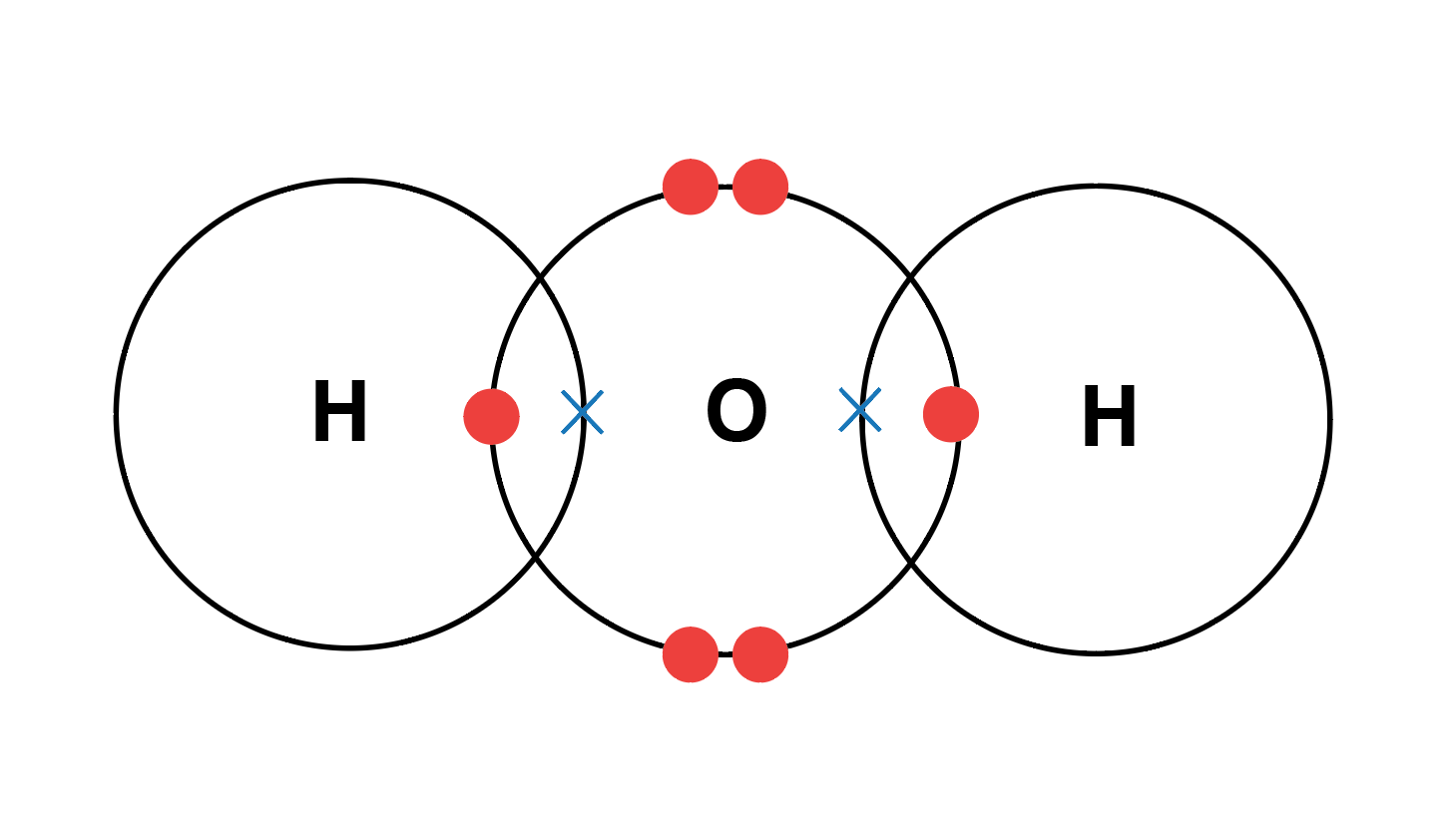
COVALENT COMPOUND: Compound with bonds between Non-Metal and Non-Metal formed by shared pair of electrons between the two atoms

ELECTRICAL CONDUCTIVITY OF COVALENT COMPOUNDS:
s
  • Covalent compounds do not conduct electricity as all valence electrons are used in forming covalent bonds, therefore there are no delocalised electrons that are free to move to conduct an electric charge
s
Example: Water ( H2O )

Water does not conduct electricity as all valence electrons are used in forming covalent bonds, so there are no delocalised electrons that are free to move to conduct an electric charge

1.56C: Understand Why Ionic Compounds Conduct Electricity Only When Molten or In Aqueous Solution


IONIC COMPOUNDS: Formed when atoms of Metals transfer electrons to atoms of Non-Metals to form compounds made up of ions
s


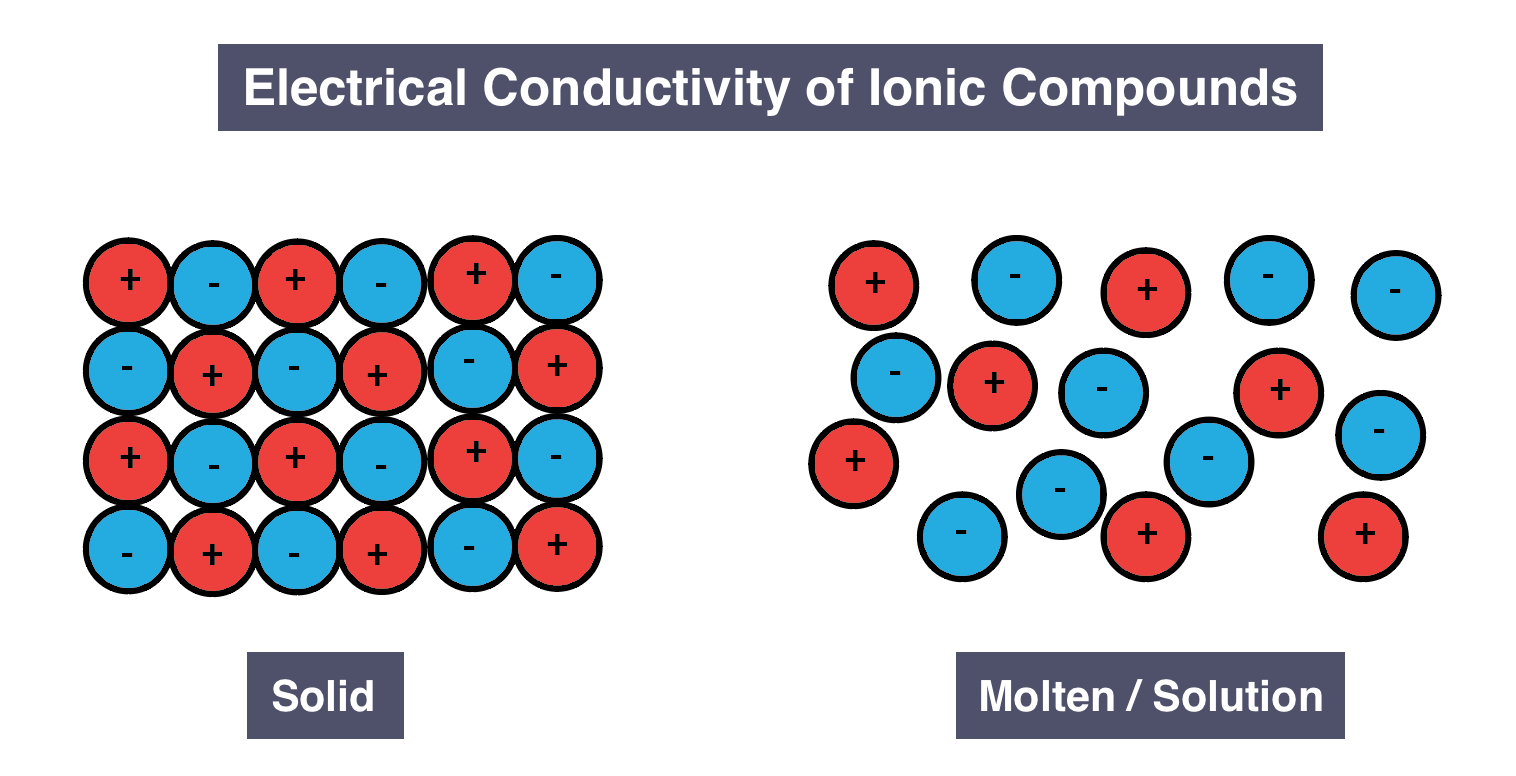
                                    Diagram showing Particles of Ionic Compounds in solids
                                     and when Molten or in Solution Form

s
ELECTRICAL CONDUCTIVITY OF IONIC COMPOUNDS:
s
  • Ionic compounds cannot conduct electricity when in solid state as ions are fixed in structure and are not free to move
  • However, ionic compounds can conduct electricity when molten or in aqueous solution as their ions are free to move to conduct an electric charge
1.57C: Know that Anion and Cation are Terms Used to Refer to Negative and Positive Ions Respectively


*ANION: Negative ions (Non-Metals) that are attracted to the positive electrode
s
REACTION AT THE POSITIVE ELECTRODE (ANODE)
s
  • Anions (Negative Non-Metal ions) are attracted to the positive electrode
  • When they get to the electrode, they lose Electrons to form atoms
s
Example: When Lead (II) Bromide is electrolysed, Bromide ion loses an electron to form Bromine atoms:
s
   2Br -     -     2e-     →     Br2


*Bromine is Formed at the Positive Electrode


*CATION: Positive ions (Metals) that are attracted to the negative electrode
s
REACTION AT THE NEGATIVE ELECTRODE (CATHODE)
s
  • Cations (Positive Metal ions) are attracted to the negative electrode
  • When they get to the electrode, they gain electrons to form Atoms
s
Example: When Lead (II) Bromide is electrolysed, Lead (II) Ions gain electrons to form Lead atoms:
s
   Pb2+     +     2e-     →     Pb
s
*Lead is Formed at the Negative Electrode

1.58C: Describe Experiments to Investigate Electrolysis, Using Inert Electrode, of Molten Compounds (Including Lead (II) Bromide) and Aqueous Solutions (Including Sodium, Chloride, Dilute Sulfuric Acid and Copper (II) Sulphate) and to Predict the Products


ELECTROLYSIS: Decomposition of an ionic substance by passing an electric current through it
s
ELECTROLYSIS OF LEAD (II) BROMIDE:
s
ELECTROLYSIS OF LEAD (II) BROMIDE
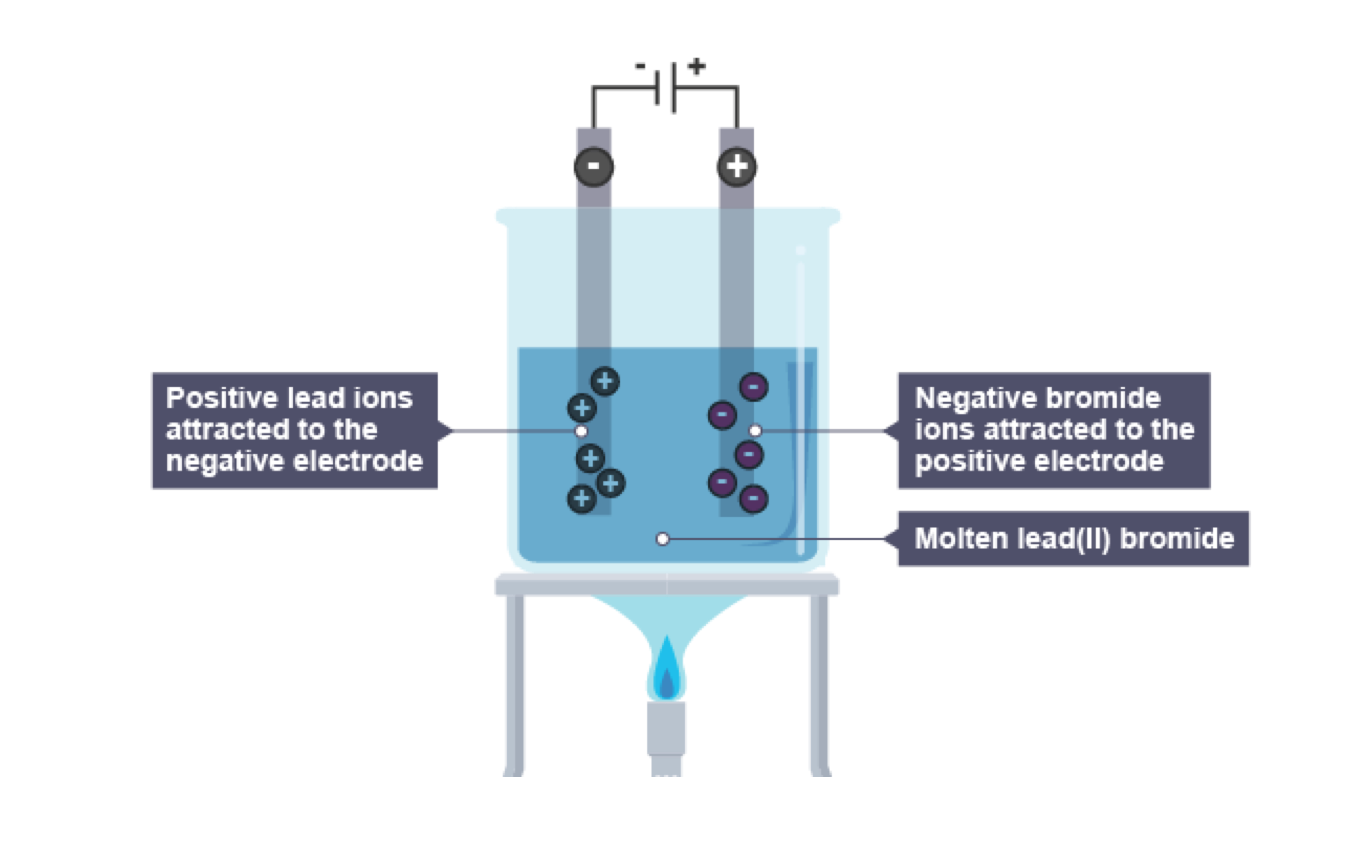
Diagram showing the Electrolysis of Lead (II) Bromide
METHOD:

  • Add Lead (II) Bromide into a beaker and heat until molten, allowing ions to be free to move to conduct an electric charge
  • Add two Graphite rods as the electrodes and connect this to a power pack or battery
  • Turn on power pack or battery and allow Electrolysis to occur

REACTION AT ELECTRODES:
SOLUTION
PRODUCT AT POSITIVE ELECTRODE
PRODUCT AT NEGATIVE ELECTRODE
LEAD (II) BROMIDE ( PbBr2 )
Bromine   -   Br2
2Br -     -     2e-     →     Br2
Lead   -   Pb
Pb2+     +     2e-     →     Pb


s

ELECTROLYSIS OF AQUEOUS SOLUTIONS:
ss
RULES:
s
  • Aqueous Solutions will Always have Water ( H2O )
s
Positive Electrode
s
  • Either Oxygen or Non-Metal will be produced E.g Chlorine, Bromine, Nitrogen
s
s
Negative Electrode
s
  • Either Hydrogen or Metal will be produced
  • If Metal is above Hydrogen in Reactivity Series, Hydrogen will be produced
  • If Metal is below Hydrogen in Reactivity Series, Metal will be produced
s
ELECTROLYSIS OF AQUEOUS SOLUTIONS
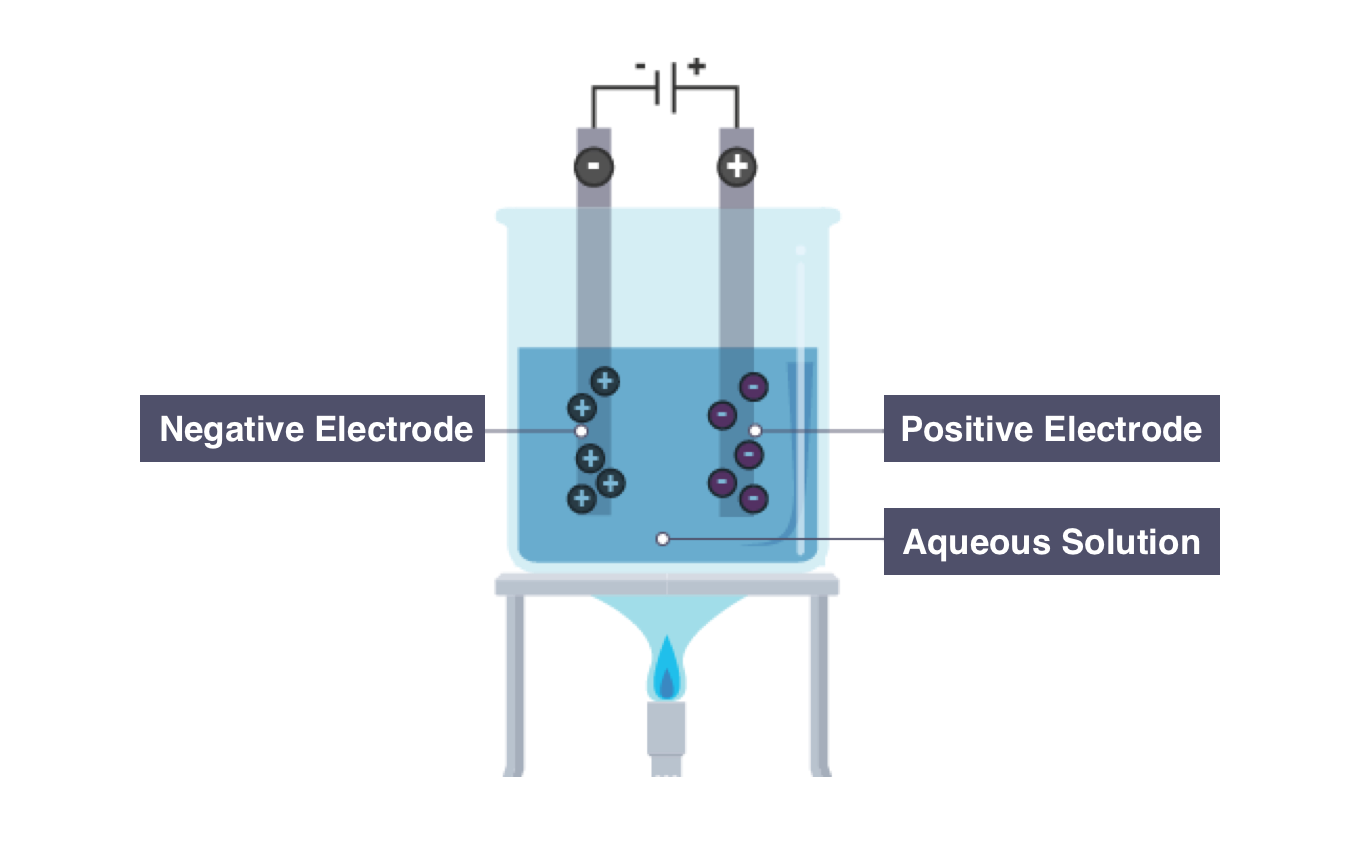
Diagram showing the Electrolysis of Aqueous Solutions
METHOD:

  • Add Aqueous Solution into a beaker
  • Add two Graphite rods as the electrodes and connect this to a power pack or battery
  • Turn on power pack or battery and allow Electrolysis to occur

REACTION AT ELECTRODES:
AQUEOUS SOLUTION
PRODUCT AT POSITIVE ELECTRODE
PRODUCT AT NEGATIVE ELECTRODE
SODIUM CHLORIDE ( NaCl )

Chlorine   -   Cl
2Cl-  -  2e-  →  Cl2
Hydrogen    -   H2
2H2O  +  2e-  →  H2  +  2OH-
DILUTE SULFURIC ACID ( H2SO4 )

Oxygen   -   O2
2H2O  -  4e-  →  O2  +  4H+
Hydrogen   -    H2
2H+  +  2e-  →  H2
COPPER (II) SULFATE ( CuSO4 )

Oxygen   -   O2
2H2O  -  4e-  →  O2  +  4H+
Copper   -   Cu
Cu2+  +  2e-  →  Cu

Sunday, July 9, 2017

1.59C: Write Ionic Half - Equations Representing the Reactions at the Electrodes during Electrolysis and Understand Why These Reactions are Classified as Oxidation or Reduction


ELECTROLYSIS: Decomposition of an ionic substance by passing an electric current through it
s
REACTION AT ELECTRODES:
s
SOLUTION
PRODUCT AT POSITIVE ELECTRODE
PRODUCT AT NEGATIVE ELECTRODE
LEAD (II) BROMIDE ( PbBr2 )

Bromine   -   Br2
2Br -     -     2e-     →     Br2
Lead   -   Pb
Pb2+     +     2e-     →     Pb
SODIUM CHLORIDE ( NaCl )

Chlorine - Cl
2Cl-  -  2e-  →  Cl2
Hydrogen - H2
2H2O  +  2e-  →  H2  +  2OH-
DILUTE SULFURIC ACID ( H2SO4 )

Oxygen - O2
2H2O  -  4e-  →  O2  +  4H+
Hydrogen - H2
2H+  +  2e-  →  H2
COPPER (II) SULFATE ( CuSO4 )

Oxygen - O2
2H2O  -  4e-  →  O2  +  4H+
Copper - Cu
Cu2+  +  2e-  →  Cu